How Big Should a Tattoo Be? Grant on Size, Technique, and Longevity
Grant, head artist at Red Baron Ink, has been tattooing for almost 16 years. We asked him why tattoo size matters, how technique affects the final result, and what to consider when choosing small lettering or a micro-portrait.
How long have you been tattooing?
I’ve been tattooing for almost 16 years.
Why does tattoo size matter? Can a tattoo be too small?
Tattoos can be small or large. It really depends on the subject matter and the image being tattooed.
A few things affect how a tattoo looks over time: how it’s applied, what pigment is used, and the overall vision for the piece. and technique Some styles call for a softer look. For example, an artist might dilute black ink to create the lighter appearance a client wants.
So there isn’t one rule for every tattoo. A small tattoo can work beautifully, and a larger one can too. It comes down to the design and the result you want.
How can an artist do a tattoo incorrectly?
There are a lot of ways. An artist might not apply the tattoo correctly—for example, by putting the ink too shallow or too deep in the skin. That can affect how the tattoo heals and looks. Going too deep can cause what tattooers call a blowout, where the ink spreads beyond the intended lines.
Artists need to practice the techniques they want to use and understand how to get the results they’re aiming for. That means building skill through practice, including on fake skin.
How can skin and small lettering affect a tattoo over time?
Tattoos change as they age. The body gradually processes tattoo pigment, and ultraviolet rays from the sun can also affect how a tattoo looks, especially without sun protection.
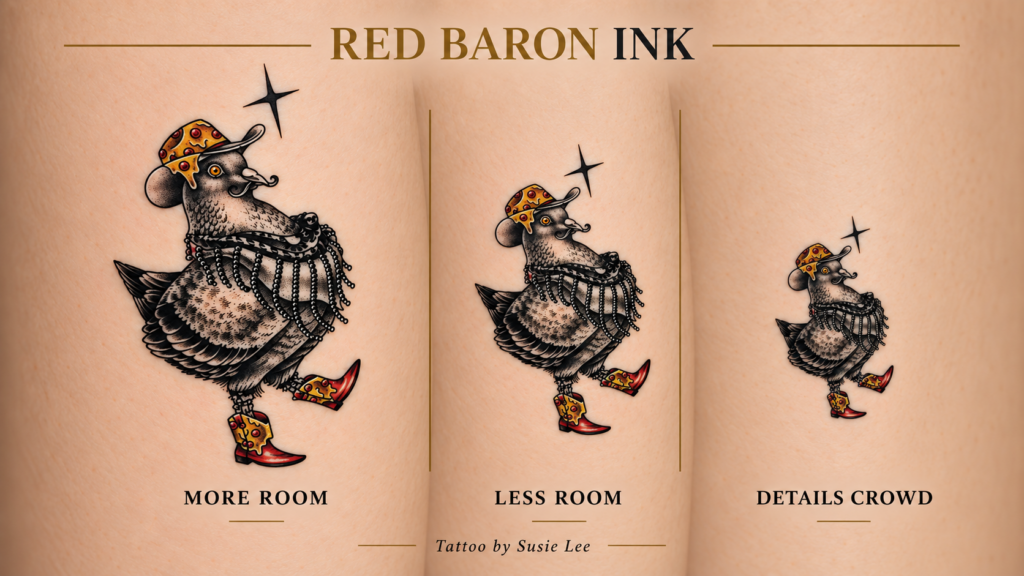
The artist’s technique matters, too. If a tattoo isn’t done well in the first place, it may not hold up well over time. With lettering, there are limits to how small or tightly spaced the text can be. An artist can sometimes adjust the design by opening up the letters and giving them more room, so the tattoo is more likely to stay clear.
Does size matter after all?
Size is ultimately the client’s choice. But it’s our job as artists to guide people, especially if they’re unfamiliar with how tattoos can change over time. Education is key.
Artists should keep learning about tattooing techniques and styles. That can mean studying methods like tebori, coil machines, and hand-poking, as well as practicing on fake skin. The more knowledge and experience an artist gains, the better they can advise clients.
I’ve also learned a lot by looking at older tattoos. If I see one that’s 15 or 20 years old, I’ll ask the client how old it is and who did it. Tattooing keeps changing, but some of the best lessons come from seeing how tattoos have held up over the years. Needles and pigments have improved, and artistry has developed too, but the fundamentals of tattooing still matter.
What do you think about micro-portraits?
Grant: I think they look great. Get one and put it right on your butt cheeks.
Giselle: Seriously, Grant—how does a micro-portrait age?
Grant: That’s just my humor.
Micro-portraits can be done well when the artist understands portraiture and realism and knows which details are essential. A common mistake is trying to squeeze every detail into a very small space. A strong portrait doesn’t need every detail from a photograph. The artist has to choose the details that make the image recognizable and work at that size.
What should clients remember when choosing a tattoo size?
Sometimes size matters. It comes down to size, technique, education, and experience. You don’t get experience without education and time.
