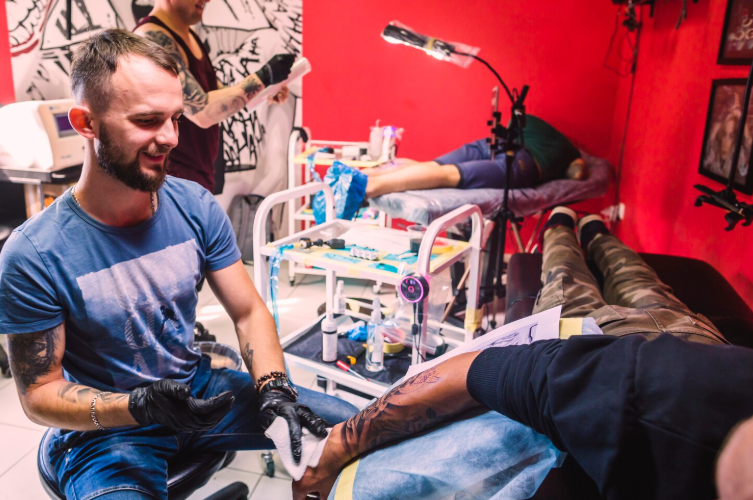
Getting fresh ink puts you right at the start of a delicate healing phase, and how you treat it now affects how it looks for years. Proper care means keeping the area clean, using a gentle moisturizer, and protecting it from anything that could cause damage.
Your tattoo artist will give specific instructions, but the basics are the same: wash gently twice a day, moisturize often, keep it out of the sun, skip swimming, and wear loose clothing that won’t rub. If you go to a local tattoo shop in New York, they’ll usually walk you through all of this and answer any questions on the spot.
Healing usually takes two to four weeks, though deeper layers of skin might need longer to settle. During this time, your body is quietly repairing itself while the ink locks into place, so patience really pays off.
Daily Cleaning Routine for New Tattoos
Fresh tattoos need consistent yet gentle cleaning to prevent bacterial infections and promote healthy healing. Wash your tattooed area twice daily using lukewarm water and a mild, fragrance-free soap. The key here is being gentle – no scrubbing or harsh rubbing that could damage the delicate healing tissue.
Pat the area dry with a clean paper towel or allow it to air dry naturally. Avoid regular bath towels during the first week since they can harbor bacteria and create friction against the sensitive skin. Your hands should be thoroughly washed before touching the tattoo to minimize contamination risk.
Some people make the mistake of over-cleaning, thinking more is better. Actually, excessive washing can strip away natural oils your skin needs for recovery and can slow down the healing timeline.
Choosing the Right Moisturizer
Once your tattoo is clean and dry, applying a thin layer of appropriate moisturizer becomes the next priority. Look for products specifically designed for tattoo aftercare or opt for unscented, hypoallergenic lotions without alcohol or petroleum-based ingredients.
Ingredients like shea butter, vitamin E, and aloe vera work well because they provide moisture without clogging pores. Apply just enough to keep the skin from feeling tight or dry – a little goes a long way here. Over-moisturizing can actually create problems by softening scabs too much or creating an environment where bacteria thrive.
Many tattoo shops recommend specific aftercare products, and while these can be pricier than drugstore alternatives, they’re formulated with healing tattoos in mind. The investment often pays off in better color retention and smoother healing.
Protecting Against Sun Damage
UV exposure poses one of the biggest threats to both healing and healed tattoos. During the healing phase, sun exposure can cause painful burns on already sensitive skin and lead to uneven color healing. Long-term sun damage causes fading, blurring, and loss of detail in tattoo artwork.
Apply broad-spectrum sunscreen with SPF 30 or higher once your tattoo has finished peeling and the skin has closed (usually after 2-3 weeks). Before that point, keep the tattoo covered with loose, breathable clothing when outdoors.
Peak UV hours between 10 AM and 4 PM present the highest risk, so plan outdoor activities accordingly or ensure adequate coverage. Even on cloudy days, UV rays can penetrate and cause damage, so don’t let overcast skies fool you into skipping protection.
Swimming and Water Exposure Guidelines
Swimming pools, hot tubs, lakes, and oceans should be completely off-limits during the initial healing period. Chlorinated water can irritate healing skin and cause chemical burns, while natural bodies of water contain bacteria that can lead to serious infections.
The general rule is waiting until all scabbing has finished and the skin feels normal to the touch before any swimming activities. This usually means 3-4 weeks minimum, though some people need longer depending on how their skin heals.
Even quick showers need some consideration during the first few days. Keep shower time brief and avoid letting the water pressure hit the tattoo directly. Hot water can cause swelling and prolong healing, so stick with lukewarm temperatures.
Clothing Choices That Support Healing
What you wear during the healing process can make or break your tattoo’s outcome. Tight clothing that rubs against the tattoo can cause scabbing to come off prematurely, potentially taking ink with it and leaving patchy areas.
Choose loose-fitting, breathable fabrics like cotton that won’t stick to healing skin. Synthetic materials can trap moisture and heat, creating conditions that slow healing or promote bacterial growth. Dark-colored clothing works better than white since some oozing and color transfer is normal in the first few days.
If your tattoo is in an area where clothing contact is unavoidable, consider using a thin layer of plastic wrap for the first day or two, following your artist’s specific recommendations. Some artists prefer this method, while others recommend letting the tattoo breathe from day one.
Signs of Proper Healing vs. Problems
Understanding what normal healing looks like helps you spot potential issues early. Typical healing includes some redness, mild swelling, and light oozing for the first few days, followed by peeling similar to a sunburn after about a week.
Warning signs that warrant contacting your tattoo artist or a healthcare provider include increasing redness that spreads beyond the tattooed area, excessive swelling, pus, red streaking, or fever. These symptoms could indicate an infection that needs prompt treatment.
The itching phase usually starts around day 3-5 and can be intense, but resist scratching or picking at scabs. Gentle patting or applying a cold compress can provide relief without damaging the healing artwork.
Long-term Care and Touch-ups
Once your tattoo has fully healed, ongoing care focuses on maintaining color vibrancy and preventing premature aging. Regular moisturizing keeps the skin healthy and the tattoo looking fresh, while consistent sun protection prevents fading and blurring over time.
Most quality tattoos will need minor touch-ups after 5-10 years, depending on factors like placement, sun exposure, and skin type. Areas that experience frequent friction or sun exposure may require attention sooner.
Building a relationship with a skilled tattoo artist means having someone familiar with your skin and artwork available for future touch-ups or additions. Many shops offer free touch-ups within the first year if you follow their aftercare instructions properly.
Taking care of a new tattoo requires patience and consistency, but following these guidelines helps ensure your investment heals beautifully and stays vibrant for years to come.
Contact Us
Need to schedule a tattoo or piercing appointment with us? Just fill out our online booking form for a tattoo or piercing request. You can also call us directly at (917) 675-7608 during business hours for a quicker response.
Address: 238 West 14th St, New York, NY 10011
Business Hours:
- Sunday to Thursday: 11:00 AM – 7:00 PM
- Friday to Saturday: 12:00 PM – 8:00 PM
We aim to respond to all emails within 24 – 48 hours. If you don’t hear from us, check your spam folder or call us for the fastest reply. We look forward to helping you with your tattoo and piercing needs.
Related Topics:
